

6 min read · BerkeyHome
If you've watched the news over the last few fire seasons, you already know: Canadian wildfires aren't a local problem anymore. Smoke from Canadian fires has drifted across the United States, affecting air quality from New York to Chicago to Atlanta. Millions of people who never thought about wildfire smoke were suddenly checking air quality indices and buying air purifiers.
But there's something most people missed in all the coverage: wildfires don't just pollute the air. They contaminate water, too. And that contamination can last long after the smoke clears.
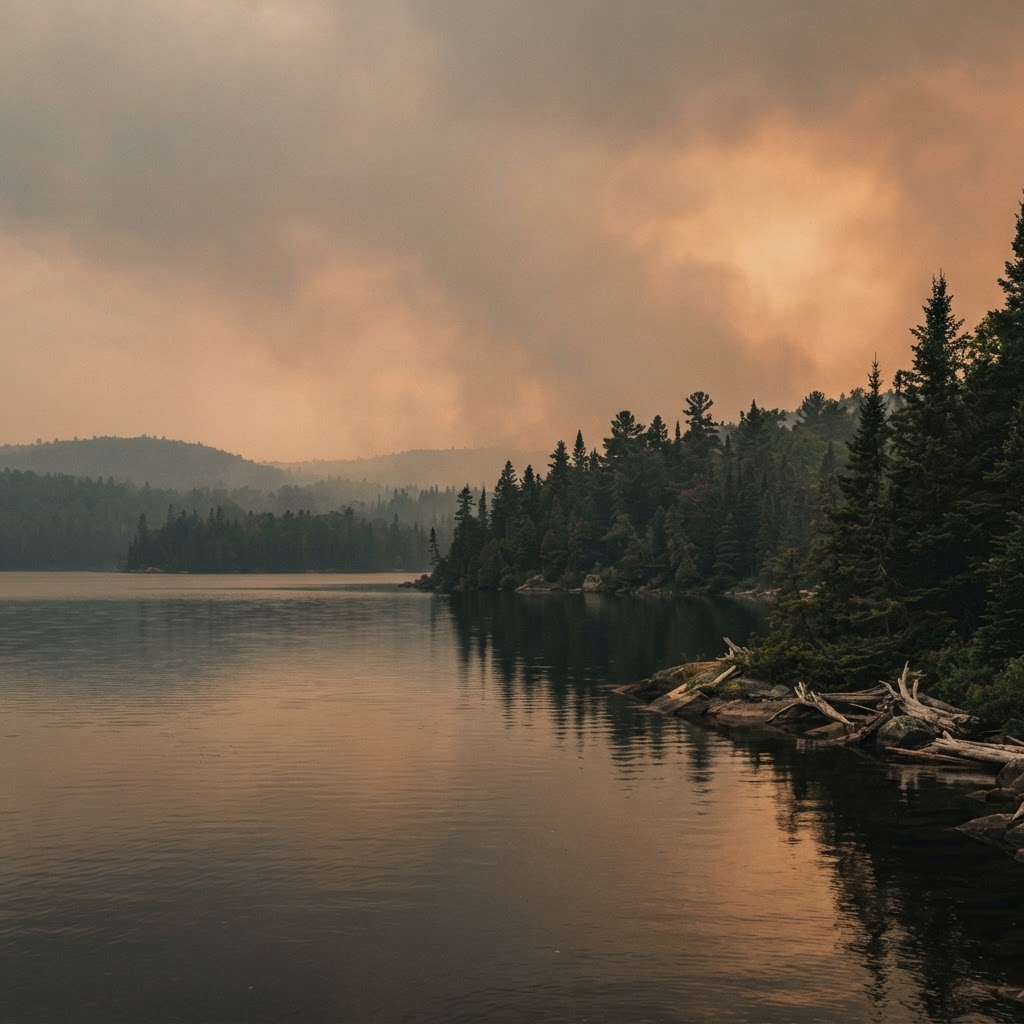
How Wildfires Contaminate Water Sources
When a wildfire tears through a forested area, the damage to watersheds is immediate and multi-layered.
Ash and sediment runoff. Vegetation normally acts as a natural sponge, holding soil in place and slowing rainfall runoff. After a fire burns that vegetation away, rainwater moves faster across the land — carrying ash, charred debris, and loose sediment directly into rivers, lakes, and reservoirs. A single heavy rain after a fire can dump months' worth of sediment into a water supply.
Chemical contamination. It's not just burnt trees. Wildfires consume everything in their path — homes, vehicles, agricultural equipment, fuel storage, treated lumber, plastics. The ash left behind is a chemical cocktail of heavy metals, volatile organic compounds (VOCs), and industrial chemicals that wash into water sources with every rainfall.
Disrupted treatment systems. Municipal water treatment plants aren't always equipped to handle the sudden spike in contamination that follows a wildfire. Increased turbidity (cloudiness) can overwhelm filtration systems, and some chemical contaminants can pass through standard treatment processes entirely.
Long-term watershed damage. Research from the U.S. Geological Survey shows that water quality impacts from wildfires can persist for five years or more after the fire is out. The loss of vegetation means continued erosion, ongoing sediment loads, and repeated contamination events every rainy season.
What This Means for Your Water
If you live in or near a wildfire-affected region — or downstream from one — your tap water may carry contaminants you can't see, taste, or smell.
The most common wildfire-related water contaminants include:
- Heavy metals (lead, mercury, arsenic, copper) from burned structures and soil disruption
- VOCs (benzene, toluene, xylenes) from burned plastics, fuels, and building materials
- Disinfection byproducts formed when chlorine reacts with elevated organic matter in the water
- Sediment and particulates that can carry adsorbed contaminants
- PFAS and other "forever chemicals" released when flame-retardant materials burn
Standard pitcher filters aren't designed to handle this range of contaminants. Most are certified for taste and odor improvement — chlorine reduction, maybe some lead — but not the complex chemical load that wildfire runoff introduces.
Why Gravity Filtration Is Built for This
Gravity filtration systems, like the Berkey systems available at BerkeyHome.com, use a fundamentally different approach than carbon pitchers or faucet attachments.
Multi-stage filtration that actually removes contaminants. The filtration elements use a combination of three processes:
- Micro-pore filtration — Millions of microscopic pathways trap bacteria, protozoa, cysts, and sediment as water passes through under gravity
- Ion exchange — Heavy metals like lead and mercury are captured by their electrical charge, locking them inside the filter media
- Adsorption — VOCs, chlorine, chloramines, and chemical residues bond permanently to the filter material instead of passing through
This isn't a single-stage carbon block. It's a layered defense designed to handle exactly the kind of complex contamination profile that wildfire runoff produces — heavy metals, VOCs, and sediment all addressed in a single pass.
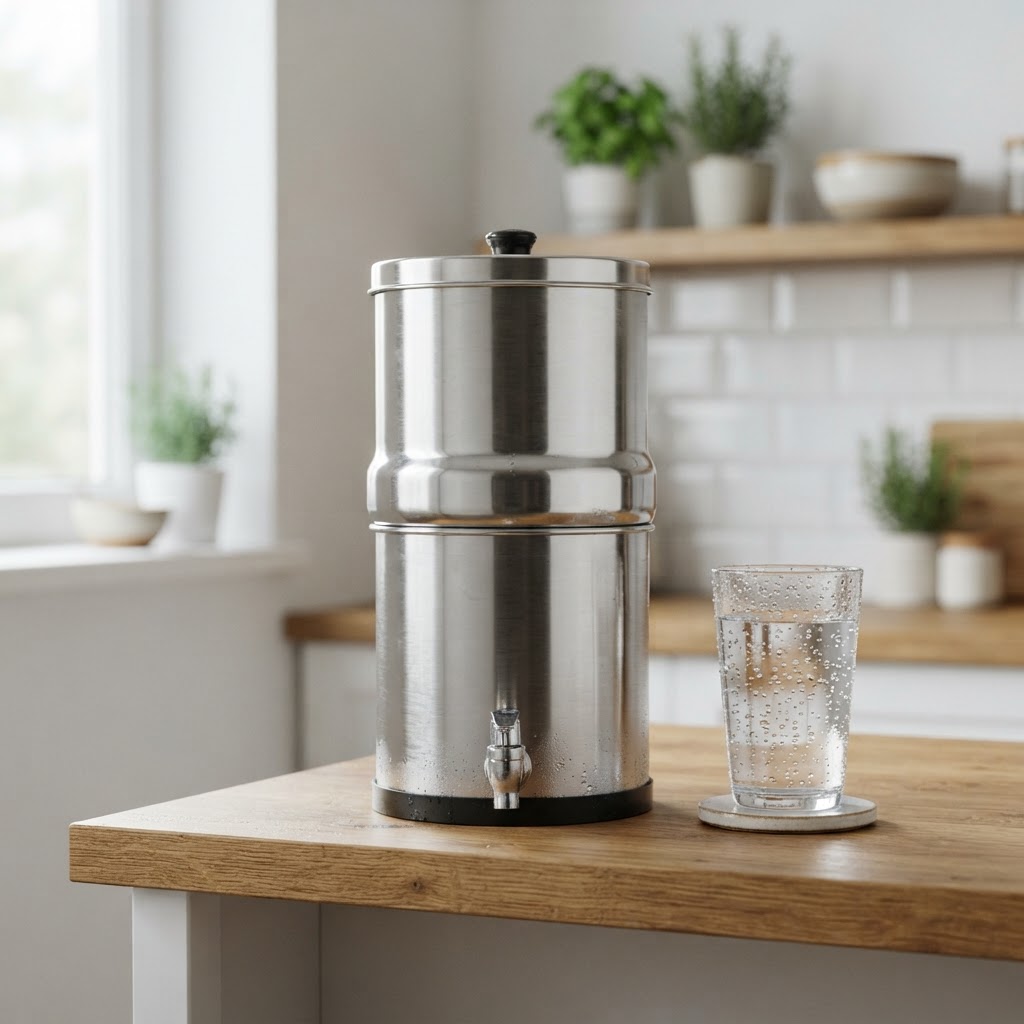
No Electricity. No Plumbing. No Dependencies.
One of the most overlooked advantages of gravity filtration during wildfire season is operational.
Wildfires disrupt infrastructure. Power outages are common. Municipal water systems can go offline. Boil-water advisories get issued and sometimes stay in effect for weeks. When the systems you rely on fail, a gravity filter keeps working.
A gravity filter sits on your counter. You pour water in the top. Gravity pulls it through the filter elements. That's it. No electricity, no water pressure, no installation, no dependency on a treatment plant that may be struggling to handle the contamination load.
If you need to evacuate, you can take it with you. If your municipal water source is compromised, you can filter water from alternative sources. It's one of the most resilient pieces of emergency preparedness equipment you can own — and it's useful every single day, not just during a crisis.
Who Should Be Paying Attention
You don't need to live next to a burning forest to be affected. Wildfire water contamination travels downstream — literally.
If any of these apply to you, wildfire water quality is worth taking seriously:
- You live in or near wildfire-prone regions (Western U.S., Canada, parts of the Southeast)
- Your municipal water comes from a river or reservoir near forested areas
- You rely on well water in a region where fires have occurred
- You live downstream from a recently burned watershed
- You want to be prepared for infrastructure disruptions during fire season
- You've noticed changes in your tap water during or after wildfire events (cloudiness, unusual taste, smell)
What About Fluoride?
An important note: Berkey gravity systems and Phoenix Gravity New Millennium Edition™ filter elements do not remove fluoride on their own. If fluoride removal is a concern for your household — especially if your municipal water is fluoridated — you'll want to add the PF-2 Fluoride Filter Add-On elements, which work in tandem with your primary filters to address fluoride specifically.
The Bottom Line
Canadian wildfire seasons are getting longer, more intense, and affecting communities further from the fire line than ever before. The air quality impacts are well-documented. The water quality impacts are less discussed — but they're real, they're measurable, and they can persist for years after a fire.
A gravity filtration system from BerkeyHome gives you a practical, proven way to address wildfire-related water contamination. It removes heavy metals, VOCs, and sediment. It works without electricity or plumbing. It's portable, durable, and ready when you need it — whether that's tomorrow or during the next fire season.
Don't wait for a boil-water advisory to start thinking about what's in your water.
Explore Berkey gravity filtration systems and Phoenix Gravity New Millennium Edition™ filter elements at BerkeyHome.com. For fluoride removal, add the PF-2 Fluoride Filter Add-On to your setup.

