
Berkey vs. Other Water Filters: 20 Honest Head-to-Head Comparisons
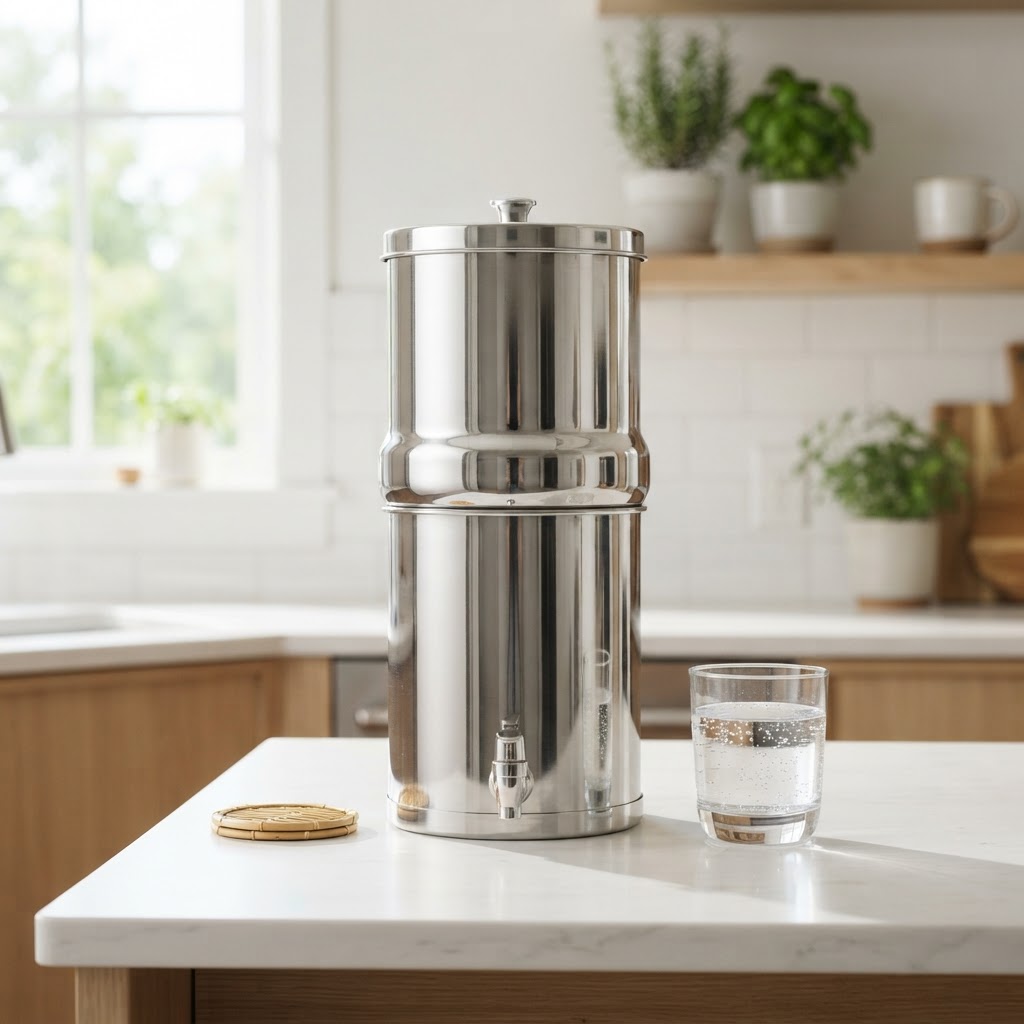
So you're wondering whether a Berkey really earns its keep, or if it's just the best-known name on the shelf. Fair question, and honestly, one we hear every day. We sell Berkey systems, so sure, we're partial. But the fastest way to answer it is with numbers, not opinions. That's why we built this library: twenty head-to-head comparisons, each one built on published specs, independent lab results, and long-run cost math.
Every guide below covers the same ground: what each filter actually removes, what it costs to own over time, how much fuss is involved (installation, electricity, plumbing), and who each option genuinely makes sense for. No scare tactics, no fluff. Pick any matchup and see for yourself.
The Numbers That Keep Coming Up
- a broad documented range contaminants Berkey filters are lab-tested against
- ~2¢ Berkey's typical cost per gallon of clean water
- 5,500 gallons from a set of Berkey Phoenix Elements
Pitcher & Countertop Matchups
Berkey vs. Brita
Brita makes water taste better. Taste, though, is only part of the story. We compare what each one actually filters out, and what a decade of ownership really costs.
Berkey vs. ZeroWater
ZeroWater takes an all-or-nothing approach that pulls healthy minerals out along with the contaminants. Here's when that matters, and when it doesn't.
Berkey vs. Culligan Pitchers
Culligan's pitcher filters are cheap up front and pricey per gallon. We run the math on replacement costs over five years.
Gravity Filter Matchups
Gravity-fed systems are Berkey's home turf, and it's a crowded field these days. These thirteen guides put the most popular alternatives next to a full-size Berkey, filter to filter:
Berkey vs. Purewell
A newer, budget-friendly gravity system with shorter-lived filters. We compare lifespan and long-term value.
Berkey vs. British Berkefeld
Two filter families with shared roots but very different performance on heavy metals and chemicals.
Berkey vs. Waterdrop
Fast and affordable, with far less published testing. Which trade-off makes sense for your kitchen?
Berkey vs. Culligan MaxClear
150-gallon filters at well over a dollar per gallon, versus elements rated for thousands. The math gets dramatic.
Berkey vs. Boroux
A familiar-looking system from a former Berkey distributor. We compare the lab data behind each.
Berkey vs. Alexapure
Similar stainless build, very different documentation trail. This one comes down to the evidence.
Berkey vs. ProOne
ProOne holds an NSF certification. Berkey counters with longer element life and documented PFAS coverage.
Berkey vs. Aqua Rain
Ceramic elements with a 12-month expiration date versus Berkey's gallon-based lifespan with no clock ticking.
Berkey vs. Katadyn
Katadyn shines on the trail. For daily home use, capacity and cost favor a countertop system.
Berkey vs. Doulton
Shorter element life and tighter flow rates versus Berkey's 2,750-gallon elements.
Berkey vs. Sawyer Dual Bag
A backpacking bag system versus a kitchen workhorse that can produce 80+ gallons a day.
Berkey vs. Zen Water
Zen focuses on alkalizing the water; Berkey focuses on purifying it. Different goals, different results.
Berkey vs. Multipure
Great carbon block filtration that needs a plumbed connection versus a system that works anywhere, no pipes required.
Filter Technology Matchups
Reverse osmosis, distillation, and other powered methods all have their place. These four guides compare them against a gravity system on cost, convenience, and what's left in your glass:
Berkey vs. Aquasana
Under-sink quality filtration that needs plumbing and power versus a countertop that needs neither.
Berkey vs. Reverse Osmosis
RO strips nearly everything, wastes water, and costs more per gallon, especially for PFAS.
Berkey vs. Distillation
Slow, power-hungry, and mineral-free by design. Gravity filtration keeps the good stuff in.
Berkey vs. AquaTru
A popular countertop RO unit that still needs electricity and sends water down the drain.
What Sets Berkey Apart in Every Matchup
Across all twenty comparisons, the same handful of advantages keep deciding things:
- Certified filtration. Berkey Phoenix Elements carry NSF/ANSI 42 and NSF/ANSI/CAN 372 certifications, with third-party lab testing to EPA guidelines covering PFAS, heavy metals, pharmaceuticals, and VOCs. Most competitors publish far less, or nothing at all.
- Cost per gallon. A pair of Berkey Phoenix Elements is rated for about 5,500 gallons, which lands your filtered water around 2 cents a gallon. Pitchers and many powered systems run ten to fifty times that.
- Nothing to install. No electricity, no plumbing, no under-sink work. Fill the top chamber and let gravity do its thing, anywhere in the house or on the road.
- Minerals stay in. Berkey removes the contaminants you don't want while leaving the calcium and magnesium you do. RO and distillation can't say that.
- Drop-in fit. Phoenix Elements install in any Berkey stainless system, from the Travel Berkey to the Crown Berkey, and pair with PF-2 fluoride filters.
Frequently Asked Questions
Is Berkey really better than reverse osmosis?
For most households, yes. RO systems need installation, electricity, and a drain line, waste 2 to 4 gallons for every gallon made, and strip beneficial minerals. Berkey counters PFAS and a broad documented range other contaminants without any of that, at a lower cost per gallon. Our full RO comparison has the details.
Why does Berkey cost more up front than a pitcher?
Because you're buying years of filtration in one purchase. A Brita filter handles about 40 gallons before replacement; a pair of Berkey Phoenix Elements is rated for around 5,500. The pitcher gets expensive one refill at a time. See the math in Berkey vs. Brita.
Does Berkey remove fluoride?
Not by itself. Add the optional PF-2 fluoride filters and Berkey reduces fluoride significantly. Most pitcher filters don't touch it at all.
How do I know these comparisons are fair?
Every figure in these guides comes from published specs, manufacturer documentation, or independent lab test results. Where a competitor hasn't published testing, we say so plainly rather than guessing on their behalf.
Ready to skip the research? Browse all Berkey systems here, or start with our most popular model, the Big Berkey (2.25 gallon). For replacement filters, see the Berkey Phoenix Elements.